
 by
Action movies have thrilled audiences for generations with breathtaking car chases, explosive fights, daring rooftop leaps, and gravity-defying stunts. While these scenes often appear spontaneous and dangerously real on screen, they are the result of meticulous planning, advanced technology, and highly trained professionals working together behind the scenes.
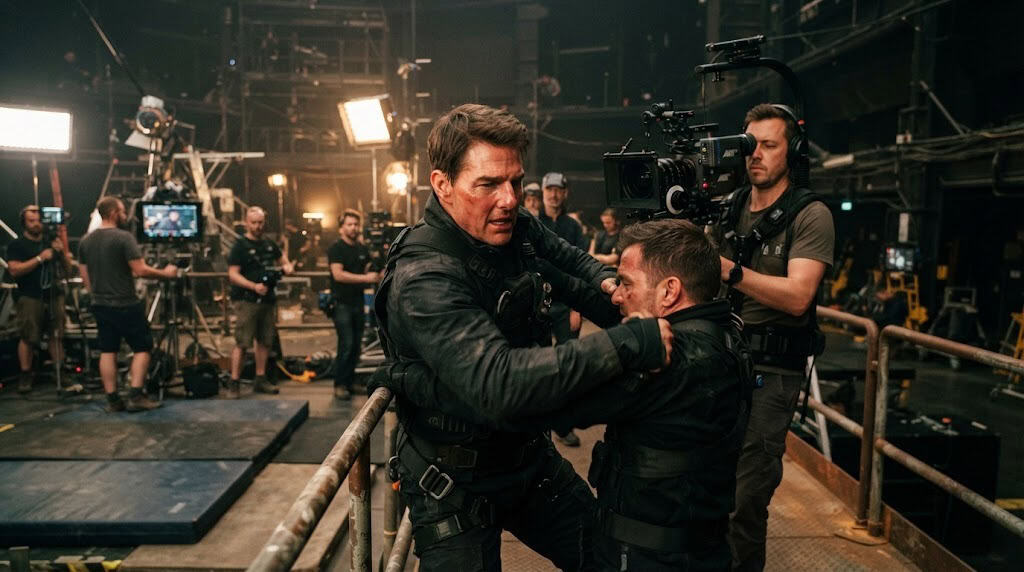
Modern filmmaking places safety above everything else. Rather than exposing actors to unnecessary danger, productions rely on experienced stunt performers, sophisticated equipment, digital visual effects, and strict safety procedures to create convincing action sequences. Every punch, fall, explosion, and high-speed chase is carefully choreographed to look authentic while minimizing risk.
This article explores how stunt scenes are filmed without putting actors at risk, highlighting the essential role of stunt coordinators, wire work, CGI, practical effects, rehearsals, safety protocols, and memorable examples from some of Hollywood’s biggest films.
Why Safety Is the Top Priority in Modern Filmmaking
Decades ago, filmmaking was far more dangerous. Safety regulations were less developed, protective equipment was limited, and many actors performed risky stunts with minimal preparation. Several serious accidents throughout film history changed the industry’s approach to stunt work forever.
Today, professional productions understand that no shot is worth risking a life. Insurance companies, production studios, unions, and government safety regulations require comprehensive planning before any potentially dangerous sequence can be filmed.
The modern goal is simple:
- Create maximum excitement.
- Minimize real-world danger.
- Protect everyone on set.
This philosophy influences every stage of stunt production.
The Role of the Stunt Coordinator
The stunt coordinator is one of the most important people on an action film set. They are responsible for designing, organizing, rehearsing, and supervising every stunt performed during production.
Planning Every Movement
Before filming begins, the stunt coordinator studies the script to determine:
- Which scenes involve physical risk
- Which actors can safely participate
- When stunt doubles are needed
- What equipment is required
- How emergency procedures will work
Nothing is left to chance.
Building the Sequence
Instead of simply telling performers to fight or jump, coordinators carefully choreograph every movement.
This includes:
- Timing punches
- Camera angles
- Landing positions
- Escape routes
- Communication signals
Many action scenes resemble dance performances because every step has been rehearsed repeatedly.
Working With Directors
Directors want scenes to look exciting.
Stunt coordinators make sure they also remain safe.
The coordinator balances creative vision with practical limitations, often suggesting safer alternatives that appear just as dramatic on camera.
Stunt Performers: The Unsung Heroes
Many dangerous scenes are not performed by the lead actors at all.
Instead, professional stunt performers step in.
These specialists spend years mastering skills such as:
- Martial arts
- Gymnastics
- Horse riding
- Motorcycle riding
- Precision driving
- Falling safely
- High diving
- Fire burns
Their extensive training allows them to perform actions that would be unsafe for most actors.
Matching the Actor
Modern makeup, wigs, costumes, and camera techniques make stunt doubles nearly impossible to recognize.
Careful editing allows audiences to believe the actor completed the stunt themselves.
Extensive Rehearsals Before Filming
One of the biggest misconceptions about movie stunts is that they happen spontaneously.
In reality, rehearsals often take far longer than filming.
Breaking Down the Action
Complex fight scenes are divided into individual movements.
For example:
- Character throws a punch.
- Opponent ducks.
- Counterattack begins.
- Kick lands.
- Performer falls.
Each action is practiced repeatedly before combining them into one smooth sequence.
Slow Before Fast
Stunts begin slowly.
Once performers become comfortable with the choreography, speed gradually increases until it reaches full performance level.
This reduces mistakes while improving realism.
Camera Rehearsals
After physical rehearsals are complete, camera crews practice their own movements.
This ensures:
- Camera operators stay safe.
- Equipment doesn’t interfere with performers.
- Every angle captures the intended illusion.
Wire Work: Making the Impossible Look Real
Wire work has become one of the most recognizable tools in action filmmaking.
Thin, high-strength cables are attached to specially designed harnesses hidden beneath costumes.
These systems allow performers to:
- Fly through the air
- Jump impossible distances
- Slow dangerous falls
- Perform superhuman movements
- Simulate zero gravity
Computer-Controlled Rigging
Modern wire rigs are incredibly sophisticated.
Many use computerized winches capable of controlling acceleration with remarkable precision.
This creates smooth, repeatable movements while reducing sudden impacts on performers.
Removing the Wires
After filming, visual effects artists digitally erase the cables.
The audience never sees the support system.
Crash Mats, Airbags, and Hidden Protection
Many dramatic falls are far less dangerous than they appear.
Behind the scenes, stunt performers often land on:
- Giant airbags
- Thick crash mats
- Foam pits
- Inflatable cushions
These safety devices are carefully positioned just outside the camera frame.
Later, visual effects teams digitally remove them.
Forced Perspective
Camera placement helps disguise protective equipment.
By choosing the right angle, filmmakers can make a short fall appear much higher than it really is.
Practical Effects That Improve Safety
Practical effects involve creating real physical events on set rather than relying entirely on computers.
Examples include:
- Controlled explosions
- Breakaway furniture
- Fake glass
- Smoke effects
- Mechanical rigs
- Hydraulic platforms
Breakaway Props
Movie bottles, tables, and windows are rarely made from ordinary materials.
Instead, they use specially designed versions that shatter safely.
Common examples include:
- Sugar glass
- Lightweight foam furniture
- Soft rubber weapons
These materials dramatically reduce injury risk.
Controlled Explosions
Explosions are managed by licensed special effects technicians.
Blast sizes, flame direction, and performer distance are calculated precisely before filming begins.
Multiple safety checks occur before each detonation.
CGI: Removing the Danger
Computer-generated imagery (CGI) has transformed stunt filmmaking.
Instead of exposing performers to unnecessary hazards, filmmakers often combine practical stunts with digital effects.
CGI can:
- Extend building heights
- Create larger explosions
- Remove safety harnesses
- Add dangerous environments
- Simulate collapsing structures
- Create digital crowds
- Enhance weather conditions
This allows scenes to appear much more dangerous than they actually were.
Motion Capture and Digital Doubles
Some stunts are simply too dangerous for any human.
In these cases, digital doubles replace actors entirely.
A digital double is a computer-generated version of the performer created using:
- Body scans
- Facial scans
- Motion capture
- Animation
The audience often cannot tell when the real actor has been replaced.
This technology has become especially common in superhero films.
Fight Choreography Is Carefully Designed
Movie fights are not real fights.
Every strike is planned.
Actors and stunt performers train extensively to create convincing combat while avoiding actual contact.
Selling the Illusion
Several techniques create believable action:
- Punches stop inches from the face.
- Camera angles hide the distance.
- Sound effects add impact.
- Editing increases speed.
- Actors react dramatically.
Together, these elements convince audiences that blows landed with tremendous force.
Precision Driving and Vehicle Stunts
Car chases are among the most dangerous sequences in filmmaking.
Professional stunt drivers undergo specialized training that includes:
- High-speed maneuvering
- Controlled skids
- Vehicle spins
- Emergency braking
- Collision techniques
Modified Vehicles
Many movie cars include hidden safety upgrades such as:
- Roll cages
- Racing harnesses
- Fire suppression systems
- Reinforced frames
- Remote driving controls
Some vehicles can even be driven remotely while appearing occupied by actors.
Fire Stunts and Burn Safety
Scenes involving fire require extraordinary preparation.
Professional fire stunt performers wear multiple protective layers beneath their costumes.
These include:
- Fire-resistant clothing
- Cooling gel
- Protective hoods
- Oxygen monitoring equipment
A team of firefighters and safety specialists remains nearby throughout filming.
Burn durations are carefully timed, often lasting only seconds before extinguishing crews intervene immediately.
Water Stunts Require Specialized Training
Water presents unique dangers.
Actors and stunt performers frequently complete:
- Swimming tests
- Scuba certification
- Breath-holding training
- Underwater communication practice
Safety divers remain just outside the camera frame during underwater scenes.
Medical personnel are also present in case of emergencies.
Safety Meetings Before Every Stunt
Before filming begins, productions conduct detailed safety briefings.
Everyone involved discusses:
- The stunt plan
- Individual responsibilities
- Equipment inspections
- Weather conditions
- Emergency procedures
- Communication methods
Every crew member understands exactly what will happen.
If anyone identifies a concern, filming stops until the issue is resolved.
Medical Teams Are Always Ready
Professional productions prepare for emergencies even when risks are minimized.
Medical staff may include:
- Emergency physicians
- Paramedics
- Athletic trainers
- Physical therapists
Ambulances are often stationed nearby during high-risk filming days.
Fortunately, careful preparation means they are rarely needed.
Multiple Camera Angles Reduce Risk
Rather than repeating dangerous stunts many times, productions frequently use several cameras simultaneously.
This offers several advantages:
- Fewer stunt repetitions
- Reduced performer fatigue
- More editing options
- Lower injury risk
Capturing multiple angles at once allows filmmakers to assemble dynamic action sequences from a single safely executed stunt.
Editing Creates More Intensity
The final excitement often comes during editing.
Editors combine:
- Close-ups
- Wide shots
- Reaction shots
- Sound effects
- Music
- Slow motion
- Fast cuts
These techniques make relatively controlled movements appear explosive and chaotic.
Many “dangerous” moments are actually the product of clever editing rather than increased physical risk.
Famous Examples of Safe Stunt Filmmaking
Some of cinema’s most iconic action scenes demonstrate how careful planning and technology work together.
Mission: Impossible – Fallout
Tom Cruise is well known for performing many of his own stunts. One of the film’s most famous moments involved a rooftop jump in which he actually broke his ankle after misjudging a landing. Despite the injury, the sequence had been extensively rehearsed, supported by safety measures, and filmed under controlled conditions. The production temporarily paused while Cruise recovered before filming resumed.
The Matrix
The groundbreaking “bullet time” sequences relied on a combination of wire work, carefully choreographed martial arts, practical effects, and innovative visual effects. Actors trained for months with martial arts experts before filming, allowing complex fight scenes to be executed safely while appearing superhuman.
Mad Max: Fury Road
This film is celebrated for its heavy use of practical effects. Professional stunt performers executed elaborate vehicle sequences using specially modified cars, safety harnesses, hidden rigging, and extensive rehearsal. Digital effects were then used to remove safety equipment and enhance the scale of the action.
John Wick
The John Wick series stands out for its realistic-looking combat. Keanu Reeves underwent months of firearms, martial arts, and tactical movement training. Because of this preparation, many scenes required fewer camera cuts, while careful choreography ensured performers remained safe throughout the intense action.
Avatar
Many of the film’s most spectacular action scenes were created using motion capture and digital characters. Actors performed in controlled studio environments while computers transformed their movements into elaborate sequences set in dangerous fictional landscapes.
The Importance of Teamwork
Successful stunt scenes depend on collaboration among numerous departments, including:
- Directors
- Stunt coordinators
- Performers
- Camera crews
- Visual effects artists
- Costume designers
- Makeup teams
- Medical staff
- Safety supervisors
Each department contributes to creating convincing action while protecting everyone involved.
No single person is responsible for a stunt’s success; it is always the product of coordinated teamwork.
How Technology Continues to Improve Safety
The future of stunt filmmaking is becoming even safer thanks to advances in technology.
Emerging innovations include:
- Virtual production environments
- AI-assisted previsualization
- Drone cinematography
- Robotic camera systems
- Improved motion capture
- Stronger lightweight safety equipment
- Advanced CGI integration
These tools allow filmmakers to visualize complex action scenes before stepping onto a set, identify potential hazards earlier, and reduce unnecessary risk during filming.
As technology evolves, audiences can expect even more spectacular action sequences created with an even greater emphasis on performer safety.
Conclusion
The thrilling stunt scenes that captivate movie audiences are far less dangerous than they appear. Behind every dramatic explosion, high-speed chase, rooftop leap, or intense fight lies a carefully coordinated process built around planning, expertise, and safety.
Stunt coordinators design every movement with precision, professional stunt performers bring years of specialized training, rehearsals refine every detail, and advanced technologies such as wire work, CGI, motion capture, and practical effects create convincing illusions without exposing actors to unnecessary danger. Hidden crash mats, reinforced vehicles, fire-resistant gear, medical teams, and strict safety protocols further ensure that risks are minimized at every stage of production.
Famous films like Mission: Impossible – Fallout, The Matrix, Mad Max: Fury Road, John Wick, and Avatar demonstrate how modern filmmaking combines practical craftsmanship with cutting-edge technology to produce unforgettable action. The result is an immersive cinematic experience where audiences can enjoy heart-pounding thrills, while the professionals behind the scenes rely on careful preparation and innovation to keep everyone as safe as possible.


